
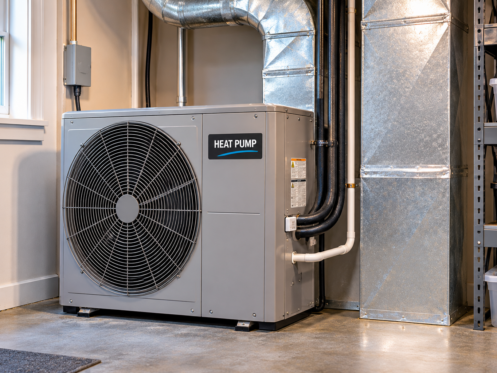
Is it okay for a heat pump to run all night in winter?
Yes, it is usually okay for a heat pump to run all night in winter. Many heat pumps are designed to operate for extended periods at lower output, maintaining consistent indoor temperatures without frequently stopping and restarting. However, persistent ice buildup, excessive defrosting, or difficulty reaching the thermostat setting may indicate a problem.
Why Heat Pumps Run for Long Periods During Winter
This process helps explain why longer operating periods can be normal.
Traditional furnaces commonly deliver relatively hot air during shorter heating cycles. Heat pumps, particularly variable-speed models, may provide gentler heat over longer periods.
Rather than repeatedly switching between full heating output and complete shutdown, a variable-speed heat pump can adjust its output to match changing heating demands.
Several factors influence overnight operation:
- Outdoor temperature and changing weather conditions.
- Thermostat settings and desired indoor temperature.
- Home insulation and air leakage.
- Heat pump capacity and operating characteristics.
- The amount of heat the home loses overnight.
When outdoor temperatures fall, a heat pump may need to operate longer to replace the heat escaping through walls, windows, ceilings, and other parts of the building.
Extended operation alone does not establish that the system is malfunctioning.
Does Running All Night Mean a Heat Pump Is Using Too Much Electricity?
Not necessarily. Operating time is only one part of energy consumption.
Electricity consumption depends on the system’s power demand, efficiency, outdoor conditions, and heating load.
The important distinction is between running time and total electricity consumption.
A system that runs longer is not automatically less efficient.
Possible contributing factors include:
- Dirty filters restricting airflow.
- Blocked indoor supply or return vents.
- Outdoor airflow restrictions.
- Incorrect thermostat configuration.
- Equipment maintenance problems.
When Is Overnight Heat Pump Operation a Warning Sign?
One important warning sign is an inability to maintain the requested indoor temperature.
During unusually cold conditions, some systems may temporarily struggle to keep up with the home’s heating demand. If the temperature continues falling or the equipment consistently cannot reach its setting, professional evaluation may be appropriate.
Outdoor ice accumulation is another consideration.
Heat pumps use defrost cycles to remove frost from the outdoor coil.
Other warning signs include:
- Defrost cycles becoming unusually frequent or prolonged.
- Significant changes in normal operating sounds.
- Reduced airflow from indoor vents.
- Heating performance becoming noticeably weaker.
- Equipment repeatedly shutting down unexpectedly.
Electrical, refrigerant, and internal equipment problems should be evaluated by a qualified HVAC professional.
Heat Pump Operation During Denver Colorado Winters
Denver, Colorado experiences winter temperature changes that can significantly affect heating demand.
A relatively mild afternoon may be followed by a much colder night. During these conditions, a heat pump may increase its operating time to maintain the indoor thermostat setting.
Cold-climate heat pumps are designed to operate at lower outdoor temperatures than many older systems, although actual heating performance depends on equipment specifications and installation.
Homes in Denver, Colorado also differ in insulation, windows, ductwork, and overall heating requirements.
Common Myth: A Heat Pump Should Turn Off Regularly to Work Properly
A common misconception is that heating equipment must shut off frequently to operate efficiently.
That assumption often comes from familiarity with conventional furnaces.
Many modern heat pumps are designed for extended operation, particularly when heating demand is high.
A system that operates steadily while maintaining the desired temperature may be functioning exactly as intended.
FAQ
Is it okay for a heat pump to run all night in winter?
Yes, it is usually normal for a heat pump to run all night in winter. Heat pumps often operate steadily at lower output to maintain indoor comfort, especially during Denver cold weather. However, persistent ice buildup, unusually frequent defrosting, or an inability to reach the thermostat setting may indicate a problem requiring professional inspection.
Should a heat pump run continuously in freezing weather?
It can be normal for a heat pump to operate continuously during freezing conditions, particularly when heating demand is high and the equipment is maintaining the desired indoor temperature.
Why does my heat pump run longer at night?
Outdoor temperatures often decrease overnight, increasing the amount of heating required to replace heat escaping from the home.
Is frost on an outdoor heat pump normal?
Light frost can be normal during heating operation. The system should periodically remove it through defrost cycles. Persistent ice accumulation may indicate a problem.
When should I schedule heat pump service?
Consider professional service when the system cannot maintain the thermostat setting, develops persistent ice buildup, or experiences unusual defrost behavior.
Conclusion
A heat pump running throughout the night is often operating normally, especially during cold winter conditions. Extended operation becomes more concerning when accompanied by inadequate heating, persistent ice accumulation, or unusual defrost activity.

