
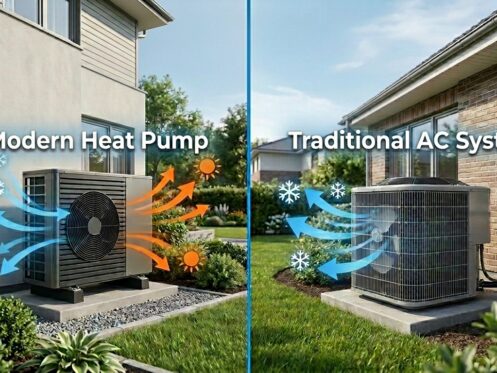
How does a heat pump compare to a traditional AC system?
Yes, heat pumps are generally considered better than traditional air conditioners (AC) for year-round comfort, energy efficiency, and sustainability. While they cool just as effectively as AC systems, heat pumps also provide heating during the winter by reversing operation, which can improve energy efficiency while reducing reliance on fossil fuels.
When homeowners in Denver, Colorado start comparing HVAC options, one of the most common questions is whether a heat pump is better than a traditional air conditioning system. The answer often depends on climate, home layout, heating needs, and how you use your home throughout the year.
A traditional AC system is designed only for cooling. A heat pump, on the other hand, can both cool and heat your home using the same system. That dual functionality is one of the biggest reasons heat pumps continue to grow in popularity among homeowners looking for efficient, all-in-one comfort solutions.
What Is the Main Difference Between a Heat Pump and a Traditional AC System?
The biggest difference is that a traditional air conditioner only cools, while a heat pump both cools and heats your home.
During summer, both systems operate similarly by removing heat from inside your home and moving it outdoors. In winter, however, a heat pump reverses the process and pulls heat from the outdoor air to warm your home.
This means homeowners may be able to replace both their AC and furnace with a single heat pump system.
For a deeper comparison between these systems, Carrier provides additional information here:
Heat Pump vs AC Units | Heat Pump vs Air Conditioner | Carrier
Why Are Heat Pumps Considered More Energy Efficient?
One reason heat pumps often outperform traditional HVAC systems is efficiency. Instead of generating heat like a furnace or electric heater, heat pumps simply move heat from one place to another.
Because of this process, heat pumps can achieve high levels of efficiency compared to many conventional heating systems.
How Does This Affect Home Comfort?
Many homeowners choose heat pumps because they provide both heating and cooling in one energy-efficient system. This allows for consistent indoor comfort throughout the year without relying on separate systems for different seasons.
Some homeowners in Denver, Colorado are especially interested in heat pumps because they offer comfort-focused performance while reducing reliance on fossil fuels.
Are Heat Pumps Better for Sustainability?
Heat pumps are considered more sustainable because they are all-electric systems. This reduces dependence on fossil fuels and can help lower a home’s overall environmental impact.
For homeowners interested in greener HVAC options, this can be a major advantage compared to a traditional AC paired with a gas furnace.
Why More Homeowners Are Exploring Electric HVAC Systems
As energy efficiency becomes a bigger priority, many homeowners are looking for systems that provide:
-
Lower energy usage
-
Reduced emissions
-
Year-round comfort
-
Fewer separate HVAC components
A heat pump checks many of those boxes while still providing effective cooling performance during warmer months.
When Is a Traditional AC System the Better Choice?
Even though heat pumps offer many advantages, there are situations where a traditional AC system may still make more sense.
Different Installation Considerations
Heat pumps and traditional AC systems each have different installation considerations depending on the home and HVAC setup.
Extremely Cold Climates
Modern cold-climate heat pumps can operate efficiently in freezing conditions, but areas with prolonged extreme cold and low natural gas availability may still benefit from a high-efficiency gas furnace paired with a traditional AC system.
In some situations, a hybrid or dual-fuel setup may offer the best balance.
Potential Wear and Tear
Because heat pumps operate throughout both summer and winter, they may experience more wear over time compared to an AC system used only during cooling season.
Both systems generally last around 10–15 years, though heat pumps may require more frequent maintenance because of year-round operation.
What Is a Hybrid Heat Pump System?
A hybrid or dual-fuel system combines a heat pump with a gas furnace.
The heat pump handles heating and cooling during milder temperatures, while the furnace provides backup heat during extremely cold weather.
For many homeowners in Denver, Colorado, this setup offers a practical balance between efficiency, reliability, and cold-weather performance.
Are Heat Pumps a Good Fit for Denver, Colorado?
For many homes in Denver, Colorado, heat pumps can be an excellent option because they provide efficient cooling during summer and dependable heating during moderate winter conditions.
However, every home is different. Factors like insulation, home size, existing HVAC equipment, and heating needs all play a role in determining whether a heat pump or traditional AC system is the better fit.
Homeowners should also consider their long-term comfort goals, home layout, and heating needs when comparing HVAC systems.
Common Myth About Heat Pumps
Myth: Heat Pumps Do Not Work in Cold Weather
This is one of the most common misconceptions about heat pumps.
While older systems struggled in freezing temperatures, many modern cold-climate heat pumps are specifically designed to operate efficiently in colder conditions.
That said, in areas with sustained extreme cold, some homeowners may still prefer a hybrid system that includes a backup gas furnace.
Why Many Homeowners Choose Heat Pumps
For year-round comfort, efficiency, and sustainability, heat pumps are often the preferred option for homeowners in moderate climates.
They offer:
-
Heating and cooling in one system
-
Higher energy efficiency
-
Reduced reliance on fossil fuels
-
Consistent indoor comfort throughout the year
Their efficiency and dual functionality make them an appealing option for many households.
FAQ
Do heat pumps cool as well as traditional AC systems?
Yes. Heat pumps cool homes just as effectively as traditional air conditioners during warm weather.
Are heat pumps more expensive to install?
Heat pumps and traditional AC systems each have different installation requirements depending on the home and HVAC setup.
Do heat pumps work during winter?
Yes. Heat pumps provide heating by reversing operation and moving heat indoors during colder months.
Can a heat pump replace both an AC and furnace?
In many homes, yes. A heat pump can handle both heating and cooling needs.
Are heat pumps energy efficient?
Yes. Heat pumps are considered highly energy efficient because they move heat instead of generating it.
FAQ: How Does a Heat Pump Compare to a Traditional AC System?
If you are comparing a heat pump to a traditional AC system in Denver, Premier Heating and Air can help you understand which option best fits your home and comfort needs. Whether you need HVAC installation, AC repair, or heating repair services, contact Premier Heating and Air today to learn more about your heating and cooling options.