
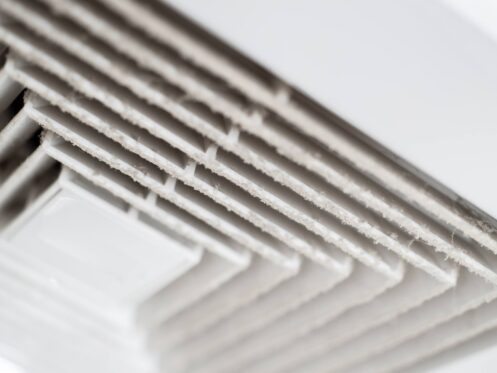
Is indoor air quality worse than outdoor?
Yes, indoor air can have higher concentrations of certain pollutants than outdoor air, although conditions vary. Some indoor pollutants can reach levels two to five times higher than typical outdoor concentrations. Because people spend much of their time indoors, poor air quality can be especially concerning for those with lung disease or other underlying health conditions.
When a cold front or winter storm rolls through and your heating system starts struggling, you’re faced with a critical decision: should you call for a furnace repair or invest in a full system replacement? Heating equipment represents one of the largest infrastructure investments in your home, and making the wrong choice can lead to recurring service bills or premature capital expenditure. Evaluating system age, cumulative repair costs, operational efficiency ratings, and recent equipment regulatory shifts provides a clear, cost-benefit framework to help you choose with confidence.
The Age Baseline
The average gas furnace has a functional lifespan of about 15 to 20 years when properly maintained. However, high-altitude operating conditions—such as dry air, low oxygen density, and intense winter heating cycles—cause components to work harder and age faster than national averages.
If your system is under 10 years old, booking a furnace repair is almost always the best option unless the unit has suffered a severe, catastrophic failure, such as a cracked heat exchanger. Equipment in this age tier usually has significant remaining operational life, and major components may still be under a manufacturer’s warranty.
Once your system reaches about 10 to 15 years old, you enter the critical decision window. Minor component fixes, such as replacing a faulty igniter or capacitor, are well worth taking care of to keep your furnace going. However, major mechanical failures warrant a close financial comparison against a full replacement. For units 15 years or older, your furnace is operating on borrowed time. Even if a minor fix resolves an immediate breakdown, aging electrical connections, blowers, and heat exchangers mean secondary component failures are likely right around the corner.
The Financial Formulas
Rather than relying on guesswork, HVAC industry professionals use two straightforward quantitative benchmarks to evaluate whether an existing unit is worth saving.
The first guideline is the 50% Rule. If the quoted cost of an individual repair approaches or exceeds 50% of the total cost of a brand-new, fully installed system, replacement is virtually always the smarter financial decision. Spending half the price of a new unit to keep a decade-old system running provides no long-term warranty protection and leaves you vulnerable to the next unexpected breakdown.
The second helpful benchmark is the “Rule of $5,000.” To calculate this, simply multiply the age of your furnace in years by the estimated repair quote in dollars. If the resulting total is less than 5,000, proceeding with the repair is generally a sound choice. If the total exceeds 5,000, your money is far better applied toward an upgraded system. For example, if a 12-year-old furnace requires a $500 blower motor replacement, multiplying 12 by 500 equals 6,000. Because this number exceeds 5,000, upgrading offers superior long-term return on investment compared to sinking funds into aging equipment.
Energy Efficiency & Operational Cost Comparison
Beyond immediate service quotes, your monthly utility bills play a major role in the overall financial equation. Older heating systems often operate at about 80% Annual Fuel Utilization Efficiency (AFUE) or lower, meaning 20 cents of every dollar spent on natural gas escapes directly up the flue pipe as wasted energy. Modern high-efficiency systems reach about 96% to 98% AFUE, utilizing two-stage gas valves and variable-speed blower motors to drastically lower monthly fuel consumption and delivers a far more consistent indoor temperatures.
Evaluating current equipment standards and state regulations also impacts your long-term value. Under recent regional environmental mandates, such as Colorado’s HB23-1161 Ultra-Low NOx standards, newly manufactured heating systems must meet stringent energy efficiency and lower-emissions criteria. While compliant Ultra-Low NOx gas furnaces or dual-fuel heat pump systems carry higher upfront equipment costs, they deliver substantial long-term payback through your bills and possible rebates, as well as available state or federal energy tax incentives.
Making the Final Decision
If your furnace is under a decade old, has been consistently serviced, and requires a straightforward component swap, scheduling a professional furnace repair will keep your home warm while preserving your budget.
However, if you are facing recurring service calls on a 15-year-old unit, seeing your utility bills creep upward, or facing a major component replacement, upgrading to a modern high-efficiency furnace or dual-fuel system eliminates emergency breakdown risks and secures predictable home comfort for years to come. Contact our team today to learn more about your options.
Frequently Asked Questions
How can I tell if my furnace’s heat exchanger is cracked, and is it worth repairing?
A cracked heat exchanger is a critical safety hazard because it allows toxic carbon monoxide gas to mix into your home’s air supply. Common warning signs include strong chemical odors, heavy soot buildup around the burner access door, a flickering yellow flame instead of a crisp blue one, or frequent carbon monoxide alarm activations. Because replacing a heat exchanger is one of the most expensive and labor-intensive procedures in the HVAC industry, doing so on a furnace over 10 years old is rarely practical. In almost every case, a cracked heat exchanger warrants an immediate full system replacement to protect both your wallet and your household’s safety.
How do altitude and dry air in Colorado impact the lifespan of my furnace?
Operating at high altitudes like the Colorado Front Range presents unique mechanical challenges for heating equipment. The thinner air contains less oxygen per cubic foot, requiring precise gas-to-air combustion adjustments to prevent fuel soot buildup and overheating. Additionally, dry winter air places a heavy load on system blowers and electrical motors. These environmental stressors cause internal components to experience higher operational strain than units located at sea level, which is why annual maintenance is crucial.
Will upgrading to a high-efficiency furnace really lower my monthly heating bills?
Yes, upgrading from an older 80% AFUE furnace to a modern 96% or 98% AFUE unit yields immediate, measurable reductions in your monthly natural gas consumption. An 80% AFUE unit loses 20% of the heat it produces directly out the flue pipe, whereas a 96%+ unit converts nearly all fuel into usable indoor warmth. Furthermore, modern high-efficiency units feature variable-speed blower motors and multi-stage gas valves that adjust their heating output dynamically based on outdoor temperatures, preventing the energy-guzzling “all-on” or “all-off” cycles typical of older single-stage systems.
What should I do if my furnace stops working unexpectedly during a winter freeze?
If your furnace fails during a cold snap, first check your thermostat settings to ensure it is set to “Heat” with the temperature set above the current room reading. Next, inspect your main electrical panel for a tripped circuit breaker, and verify that your furnace’s air filter is clean, as a severely clogged filter will trigger safety limit switches that shut the system down. If these basic checks do not resolve the issue, turn off the unit and contact a licensed HVAC technician for an emergency furnace repair immediately. To prevent frozen pipes while waiting for service, keep interior doors open, open cabinet doors under sinks, and run faucets at a slow trickle.

